

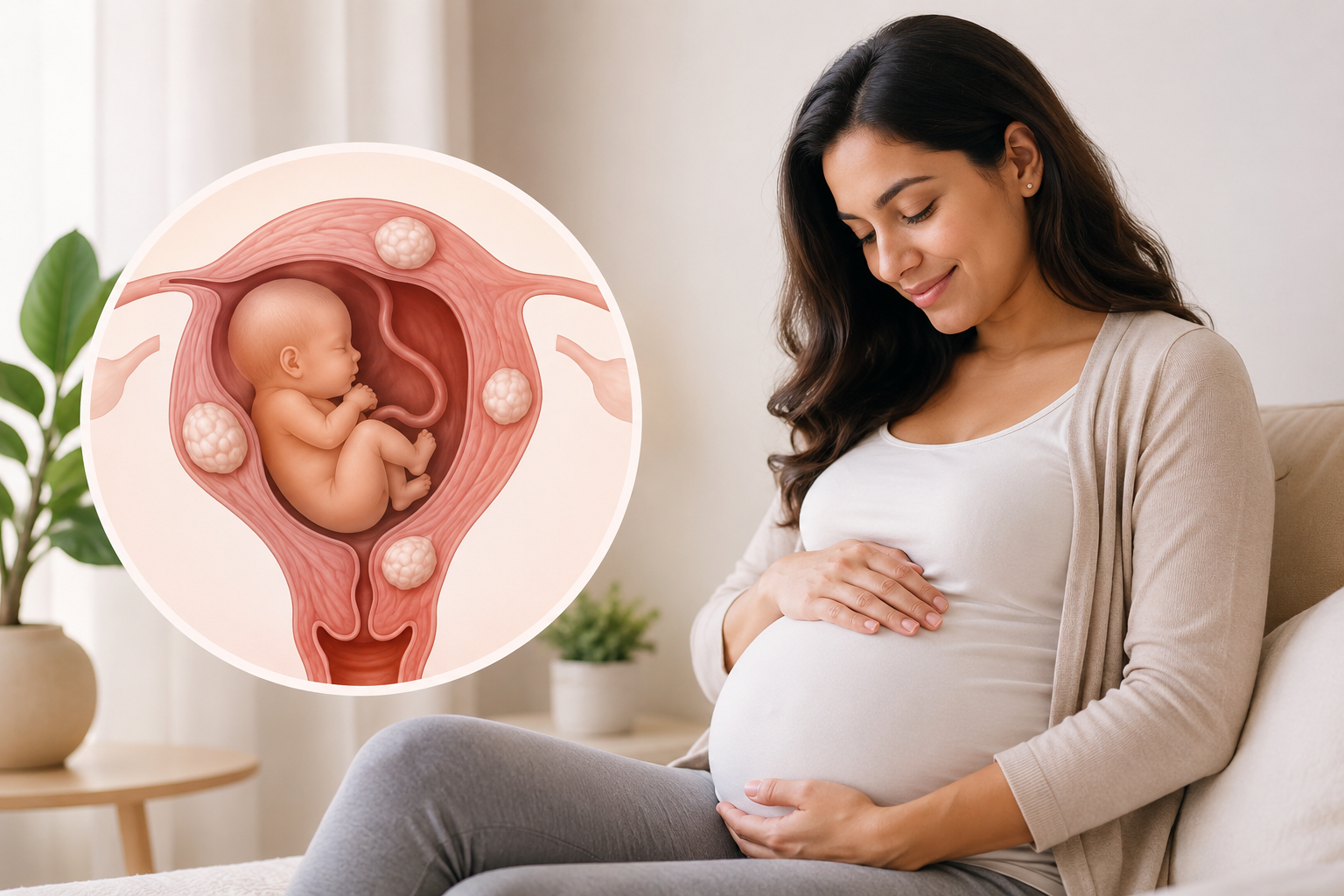
14 Jun Fibroids During Pregnancy – Expert Care by Dr. Usha M Kumar (Best Uterine Fibroids Specialist in Delhi)


Pregnancy is a beautiful journey filled with excitement and anticipation. However, for women diagnosed with uterine fibroids, it can also bring anxiety and many questions about safety, delivery, and baby health. If you’ve been diagnosed with fibroids during pregnancy, the first thing to know is this: most women with fibroids go on to have completely normal pregnancies and healthy babies. With expert guidance from experienced specialists like Dr. Usha M Kumar, Best Uterine Fibroids Specialist in Delhi, fibroids can be safely monitored and managed throughout pregnancy to ensure the best outcomes for both mother and baby.
What Are Fibroids in Pregnancy?
Fibroids (also called uterine myomas or leiomyomas) are non-cancerous growths in the uterus. They can vary in size—from very small nodules to large masses that may alter the shape of the uterus.
Many women discover fibroids for the first time during routine pregnancy ultrasound scans.
The good news is:
👉 Fibroids are not cancerous
👉 They usually do not harm the baby
👉 Most do not require surgery during pregnancy
How Common Are Fibroids During Pregnancy?
Fibroids are more common than most people realize. Around 2% to 10% of pregnant women may have them.
Most cases are diagnosed incidentally during antenatal scans, meaning women often had no symptoms before pregnancy.
Are Fibroids Dangerous During Pregnancy?
In most cases, fibroids are not dangerous.
However, depending on their size, number, and location, they may sometimes cause:
- Mild abdominal pain or pressure
- Light spotting or bleeding
- Discomfort in later pregnancy
- Changes in fetal position
With proper monitoring by experts like Dr. Usha M Kumar at Max Hospital Delhi, these risks can be effectively managed.
Do Fibroids Grow During Pregnancy?
Fibroid growth during pregnancy varies from woman to woman.
What usually happens:
- Some fibroids grow in the first trimester
- Many remain stable
- Some may even shrink later
About 70–80% of fibroids do not grow significantly during pregnancy.
Why growth may happen:
- Increased estrogen and progesterone levels
- Increased blood flow to the uterus
- Hormonal stimulation of fibroid cells
Red Degeneration – Why Pain Occurs
Sometimes fibroids outgrow their blood supply, leading to a condition called red degeneration.
Symptoms include:
- Sudden sharp abdominal pain
- Local tenderness
- Mild fever (occasionally)
Although painful, this condition is usually self-limiting and managed with rest, hydration, and safe medications under medical supervision.
Effects of Fibroids on Pregnancy
Possible risks for the mother:
- Pain during pregnancy
- Preterm labor
- Increased chance of C-section
- Rare placental complications
- Postpartum bleeding
Possible risks for the baby:
- Breech position
- Growth restriction (rare)
- Preterm birth complications
However, most pregnancies remain completely safe with proper care.
Types of Fibroids and Their Impact
1. Submucosal Fibroids
Located inside the uterine cavity
➡ Higher risk of miscarriage and implantation issues
➡ Most closely monitored type
2. Intramural Fibroids
Located in the uterine muscle wall
➡ Most common type
➡ May cause pain or preterm contractions
3. Subserosal Fibroids
Located on outer uterine surface
➡ Usually least problematic
➡ May cause pressure symptoms if large
Will You Need a C-Section?
Not always.
Many women with fibroids deliver normally.
A C-section may be needed if:
- Fibroid blocks the birth canal
- Baby is in an abnormal position
- Labor does not progress
Doctors usually avoid removing fibroids during delivery due to bleeding risks.
Pregnancy After Myomectomy (Age 40+)
Pregnancy after fibroid removal surgery is possible even after age 40, but requires careful monitoring.
Possible considerations:
- Slightly higher risk pregnancy
- Increased chance of C-section
- Reduced fertility due to age
With expert care from specialists like Dr. Usha M Kumar, many women still achieve successful pregnancies.
How Fibroids Are Managed During Pregnancy
Treatment is usually conservative and safe:
- Regular ultrasound monitoring
- Pain management with safe medicines
- Rest and hydration
- Close fetal growth tracking
Surgery is rarely needed during pregnancy unless there is a serious complication.
When to See a Doctor Immediately
Seek medical attention if you experience:
- Severe abdominal pain
- Heavy bleeding
- Fever with pain
- Early contractions
- Reduced fetal movement
Early diagnosis ensures safe outcomes for both mother and baby.
Expert Care for Fibroids in Pregnancy
Managing fibroids during pregnancy requires experience, precision, and continuous monitoring.
At Dr. Usha M Kumar, patients receive:
- Advanced fibroid evaluation
- High-risk pregnancy care
- Personalized treatment planning
- Safe delivery guidance
With decades of experience in gynecology and fibroid management, she is regarded as one of the leading uterine fibroids specialists in Delhi, India.
Final Thoughts
Fibroids during pregnancy may sound worrying, but in most cases, they do not prevent a healthy pregnancy or normal delivery.
With proper monitoring and expert guidance, most women experience safe pregnancies and healthy babies.
The key is timely diagnosis, regular follow-ups, and specialist care.







Sorry, the comment form is closed at this time.