

27 Mar How Robotic Surgery Is Revolutionizing Endometriosis Treatment in Delhi


For decades, women living with endometriosis had limited surgical options — open abdominal surgery with painful recoveries, or conventional laparoscopy that struggled with complex, deep-stage disease. Today, a technological revolution is changing everything. Robotic surgery — powered by the state-of-the-art da Vinci Surgical System — is transforming how endometriosis is diagnosed, excised, and treated, offering women in Delhi access to world-class precision care right here at home. Dr. Usha M Kumar, recognized as Delhi’s Best Gynaec Robotic Surgeon, is at the forefront of this surgical revolution — bringing globally advanced robotic techniques to women across India.
Endometriosis is a chronic condition affecting 6–10% of women of reproductive age, with pelvic pain and infertility being the most debilitating symptoms. When medication fails to control the disease, surgery becomes necessary — and the quality of that surgery determines everything: pain relief, fertility outcomes, and quality of life.
What Is Robotic Surgery for Endometriosis?
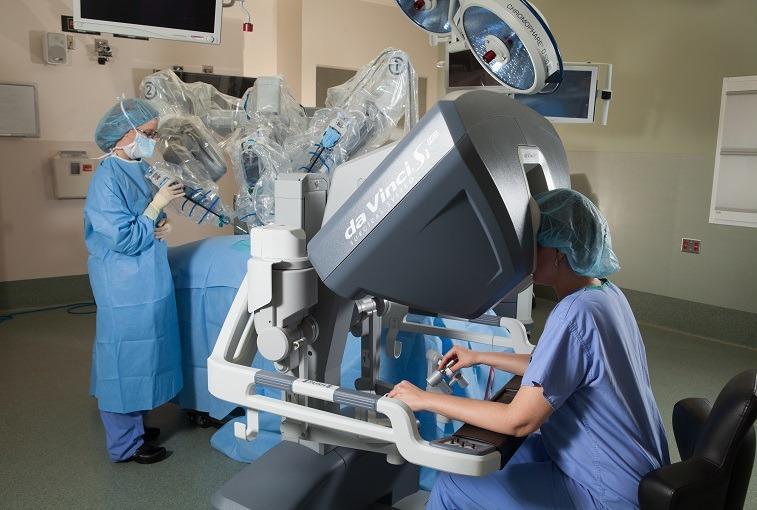
Robotic surgery is not science fiction — and it is not a robot operating independently. During a da Vinci endometriosis resection, the surgeon sits at a console and operates using tiny, fully wristed instruments, while a camera provides highly magnified 3D HD vision that delivers a crystal-clear view of tissue — and every hand movement the surgeon makes is translated by the da Vinci system in real time to manipulate the instruments with extraordinary precision.
The procedure involves 4–5 tiny incisions in the abdomen. Robotic arms holding specialized surgical instruments are inserted through these incisions, guided entirely by the surgeon from a seated console. The result is a minimally invasive procedure with maximum surgical accuracy — combining the best of open surgery’s control with the minimal trauma of keyhole surgery.
The da Vinci Xi and SP systems — the latest generation of robotic platforms — offer advanced features such as enhanced arm mobility, fluorescence imaging, and single-port capabilities, enabling even more complex procedures to be performed minimally invasively.
Why Robotic Surgery Is a Game-Changer for Endometriosis
1. Superior 3D High-Definition Visualization
One of the most critical challenges in endometriosis surgery is identifying every lesion — including tiny, deep-seated implants invisible to the naked eye. 3D robotic visualization is associated with more than twice the likelihood of detecting a confirmed endometriosis lesion compared to the 2D vision provided by conventional laparoscopy.
This enhanced visibility means fewer missed lesions, more complete excision, and significantly lower rates of disease recurrence after surgery.
2. Unmatched Precision and Dexterity
Robotic surgery offers enhanced dexterity, wrist-like articulation of instruments, and ergonomic access to deep and narrow anatomical compartments such as the pelvis. This is critical for endometriosis surgery, where lesions can wrap around the bowel, bladder, ureters, and delicate pelvic nerves.
The clinical benefits of robotic-assisted surgery include greater precision and accuracy, reduced surgeon fatigue, and a faster learning curve — all facilitated by advanced ergonomic and control systems.
3. Ideal for Deep Infiltrating Endometriosis (DIE)
The most complex and severe form of endometriosis — Deep Infiltrating Endometriosis — involves lesions that penetrate more than 5mm below the peritoneal surface, often invading the bowel, bladder, and nerves. This is where robotic surgery truly excels.
Deep infiltrating endometriotic lesions often require meticulous dissection and precise excision — tasks that are extremely difficult with conventional laparoscopy due to limited instrument maneuverability and visualization. Robotic surgery’s enhanced 3D visualization, greater dexterity with articulated instruments, and improved ergonomics make it particularly suited for addressing the complexities of deep infiltrating endometriosis, potentially leading to more complete lesion removal and better patient outcomes.
4. Fertility Preservation
For women who wish to conceive, preserving healthy ovarian tissue is paramount. Robotic cystectomy may result in less ovarian tissue and follicular loss compared to laparoscopic methods, particularly in cases of bilateral disease and larger cyst sizes — highlighting the potential benefits of robotic surgery in preserving ovarian function.
Successful resection of all visible lesions can effectively treat endometriosis-related infertility and pelvic pain, and minimally invasive surgery provides significant advantages — including lower rates of surgical trauma, infection, postoperative pain, and shorter hospital stay.
5. Faster Recovery, Less Pain, Minimal Scarring
Clinical outcomes with robotic-assisted surgery have generally shown benefits such as reduced blood loss, shorter hospital stays, and quicker recovery times, though these advantages can vary depending on the type of surgery and patient population.
Most of Dr. Usha M Kumar’s robotic surgery patients are discharged within 1–2 days and return to normal activities within 1–2 weeks — a dramatic improvement compared to open surgical recovery times of 4–6 weeks.
Who Is a Candidate for Robotic Endometriosis Surgery?
Robotic surgery is especially recommended for:
- Women with Stage III or Stage IV endometriosis
- Deep Infiltrating Endometriosis involving the bowel, bladder, or ureters
- Large ovarian endometriomas requiring fertility-sparing cystectomy
- Women who have had previous failed surgeries with incomplete excision
- Patients requiring nerve-sparing pelvic dissection
- Women with endometriosis-related infertility seeking pregnancy
- Cases where conventional laparoscopy has technical limitations due to anatomy or complexity
The Future of Robotic Endometriosis Surgery
The technology is evolving rapidly. The fifth-generation da Vinci system, introduced in 2024, has incorporated force feedback features, and the integration of near-infrared fluorescence imaging with indocyanine green — coupled with artificial intelligence — may further enhance endometriosis detection and surgical excision.
Robotic surgery represents a significant evolution in the surgical treatment of endometriosis, offering technical advantages that can improve clinical outcomes and quality of life for patients with complex forms of the disease.
Dr. Usha M Kumar continuously updates her skills and techniques to stay aligned with the very latest global advances — ensuring her patients in Delhi receive care that matches the best centres worldwide.
Why Dr. Usha M Kumar Is Delhi’s Best Gynaec Robotic Surgeon
Choosing the right surgeon for endometriosis is as important as choosing the right technology. Dr. Usha M Kumar brings together:
- ✅ Decades of specialized experience in complex gynaecological surgery
- ✅ Mastery of the da Vinci Robotic Surgical System (Xi & SP platforms)
- ✅ Expertise in all stages of endometriosis — from Stage 1 to advanced DIE
- ✅ A fertility-first surgical philosophy — protecting ovarian reserve and tubes
- ✅ Multidisciplinary collaboration for complex bowel and bladder involvement
- ✅ Compassionate, individualized patient care from first consultation to full recovery
- ✅ Consistently excellent patient outcomes and high satisfaction rates
Her patients come to her not just from Delhi, but from across India and abroad — seeking the rare combination of surgical excellence, cutting-edge technology, and genuine empathy.
FAQs: Robotic Surgery for Endometriosis — Dr. Usha M Kumar Answers
Q1. Is robotic surgery safe for endometriosis?
Yes — robotic surgery for endometriosis is very safe when performed by an experienced surgeon like Dr. Usha M Kumar. Studies involving thousands of patients confirm that robotic surgery carries complication rates comparable to conventional laparoscopy, with the added advantage of superior precision in complex cases. The da Vinci system’s design also includes multiple safety redundancies.
Q2. How is robotic surgery different from laparoscopy?
Both are minimally invasive approaches using small incisions. The key difference is that robotic surgery uses a sophisticated system that gives the surgeon a magnified 3D HD view and wristed instruments with seven degrees of freedom — far greater than the straight instruments used in standard laparoscopy. This makes robotic surgery significantly superior for complex, deep-stage endometriosis where precision is critical.
Q3. Will robotic surgery help me get pregnant?
For many women, yes. By achieving complete excision of all endometriotic lesions while carefully preserving healthy ovarian tissue and the fallopian tubes, robotic surgery creates the best possible conditions for natural conception or assisted reproductive treatments like IVF. Dr. Usha M Kumar takes a fertility-first approach in every surgical decision.
Q4. How long is the recovery after robotic endometriosis surgery?
Most patients are discharged within 24–48 hours. The majority return to light daily activities within 7–10 days and to full normal activity within 2–3 weeks. This is significantly faster than open surgery recovery, which typically takes 4–6 weeks.
Q5. How many incisions are made during robotic surgery?
Typically, 4–5 small incisions of approximately 8–12mm each are made in the abdomen. These heal quickly, leave minimal scarring, and cause far less postoperative pain compared to an open abdominal incision.
Q6. Is robotic surgery available for severe or Stage 4 endometriosis?
Absolutely — in fact, this is where robotic surgery offers the greatest advantage. Stage 4 or deep infiltrating endometriosis involving the bowel, bladder, and pelvic nerves is among the most technically challenging surgery in all of gynaecology. Dr. Usha M Kumar’s robotic surgical expertise makes her uniquely equipped to manage even the most complex cases safely and completely.
Q7. How do I know if I need robotic surgery or conventional laparoscopy?
Dr. Usha M Kumar evaluates each patient individually. After a thorough clinical examination, transvaginal ultrasound, and MRI pelvis, she determines the extent and complexity of your disease and recommends the most appropriate surgical approach. For straightforward cases, conventional laparoscopy may suffice. For complex or deep-stage disease, robotic surgery offers clear advantages.
Q8. Why should I choose Dr. Usha M Kumar for robotic endometriosis surgery in Delhi?
Dr. Usha M Kumar is one of Delhi’s most experienced gynaec robotic surgeons with a proven track record in managing all stages of endometriosis. She combines world-class surgical skill with a deeply patient-centered approach — ensuring that every woman receives not just excellent surgery, but comprehensive care, emotional support, and long-term follow-up.
Book Your Consultation with Dr. Usha M Kumar
If you are living with endometriosis and want to know whether robotic surgery can help you, take the first step today.







Sorry, the comment form is closed at this time.